




Daily fantasy sports can differ greatly from season-long fantasy baseball leagues. Though the end goal of accumulating the best statistics from a group of MLB players is the same, strategy and roster build couldn't be more different. Managers of DFS teams will need to take into account MLB projections each day while considering matchups, injuries and additional factors to build a winning team.
Daily Fantasy Sports, as its name suggests, is about building a baseball roster for a single day. That means you can take injury risk, age and other factors out of the equation when analyzing MLB player stats. Here's what DFS players should know about the difference.
Short-Term Variance vs. Long-Term Trends
Since you'll only "own" the players you use to build your team for a single day, you can get creative with how your lineup is constructed. Targeting players from the same team is a risky proposition in season-long leagues, but it works well in DFS if a team is facing a poor pitcher or is in a hitter-friendly park like Coors Field or Great American Ballpark. It also makes sense to look at totals at online sportsbooks. If a game is projected to be high-scoring, getting a cluster of hitters together from that game makes a lot of sense.
In season-long fantasy baseball leagues, stacking is risky if players with high fantasy baseball auction values don't perform. Stacking three players from the same lineup can backfire if one player struggles, meaning the others can't drive
Daily fantasy sports can differ greatly from season-long fantasy baseball leagues. Though the end goal of accumulating the best statistics from a group of MLB players is the same, strategy and roster build couldn't be more different. Managers of DFS teams will need to take into account MLB projections each day while considering matchups, injuries and additional factors to build a winning team.
Daily Fantasy Sports, as its name suggests, is about building a baseball roster for a single day. That means you can take injury risk, age and other factors out of the equation when analyzing MLB player stats. Here's what DFS players should know about the difference.
Short-Term Variance vs. Long-Term Trends
Since you'll only "own" the players you use to build your team for a single day, you can get creative with how your lineup is constructed. Targeting players from the same team is a risky proposition in season-long leagues, but it works well in DFS if a team is facing a poor pitcher or is in a hitter-friendly park like Coors Field or Great American Ballpark. It also makes sense to look at totals at online sportsbooks. If a game is projected to be high-scoring, getting a cluster of hitters together from that game makes a lot of sense.
In season-long fantasy baseball leagues, stacking is risky if players with high fantasy baseball auction values don't perform. Stacking three players from the same lineup can backfire if one player struggles, meaning the others can't drive him in to "double-dip" on your stats.
The Importance of Matchups and Ballpark Factors
Over a 162-game season, each team will play the other 29 at least once. And while certain teams will face more difficult schedules than others, matchups generally aren't something to consider when looking at with fantasy baseball ADP as you draft your team.
The opposite is true with DFS, where a worse hitter playing in Coors Field can be more valuable than a better hitter in Seattle. You'll want to avoid (in most instances) batters facing the league's aces like Tarik Skubal, Garrett Crochet and Paul Skenes, though they may be cheaper and worth a look if the value is great. Some hitters like Bobby Witt, Shohei Ohtani and Aaron Judge are generally matchup-proof, but factors like starting pitchers (or opposing offenses, in pitchers' cases), weather and ballparks are crucial to consider when building your lineup.
Salary Cap Management vs. Draft Capital
Season-long fantasy baseball leagues are about balancing a team that can withstand the rigor of a 6+ month season. You may need to take fantasy baseball dynasty rankings into account for future players, and you'll want to weigh risk vs. reward with each of your picks. Generally speaking, however, players are going to be drafted within a relatively small range of where they're projected to go, especially in the early rounds.
With DFS, you're looking to fit puzzle pieces together that match the budget you're given without going over. It's important to have one or two anchors in your lineup since those players are usually projected to produce the highest point totals, but you'll also want to dig deep and find value to balance out the cost of those expensive roster spots.
This involves tinkering, and you'll likely swap in and out players multiple times, but you'll get better each time learning what value looks like as you go.
Pitching Strategy: Safe Floors vs. High Ceilings
Pitching is its own beast in season-long fantasy baseball leagues, where you're looking for good value in the bullpen and starters who can make 30+ starts in a season. That goes out the window with DFS, where you're looking for a starter in a juicy spot against a poor lineup who can dominate on any given night.
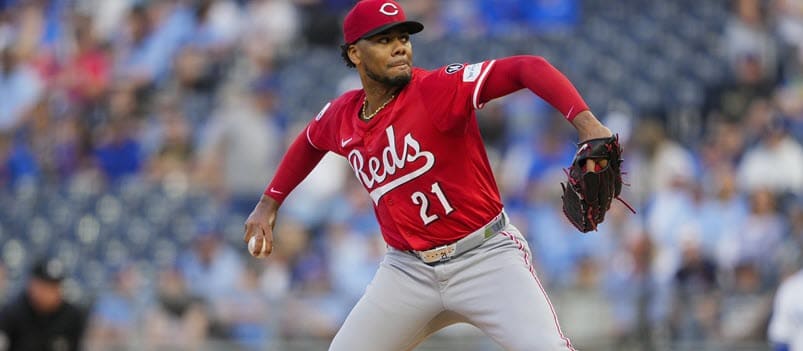
A perfect example is Reds' starter Hunter Greene, who has never made more than 26 starts in a season. That hurts him in season-long leagues and why he's lower on fantasy baseball rankings than one might expect. But when he's healthy and on the mound, he's dominant (11.2 K's per 9 in his career and a 3.65 ERA). It's another opportunity for stacking, where adding Greene alongside Reds closer Emilio Pagan makes sense.